How Modern LED Fixtures Are Reshaping Home Lighting Design
Energy-efficient illumination moves beyond pure utility into aesthetics and control.

LED lighting has stopped being a novelty and become the standard in most homes. The shift happened faster than many expected, driven by falling prices and rising performance.
What makes 2026's LED fixtures different from earlier generations isn't just efficiency—it's versatility. Today's options span form factors, color ranges, and smart-home integration that would seem like overkill five years ago.
The real story isn't about energy savings anymore. It's about what these fixtures let homeowners do with light itself.
The Design Evolution
Early LED adoption centered on retrofit bulbs—the same shape as incandescent, just different chemistry inside. That's still common, but fixture design has moved far beyond drop-in replacements.
Manufacturers now treat LED strips, integrated panels, and modular systems as design elements rather than afterthoughts. Cove lighting, linear suspensions, and recessed arrays blend seamlessly into architecture.
Form follows function, but function now includes dimming curves, color temperature shifts, and wireless control. A fixture must perform technically and look intentional in the space.

Why Homeowners Make the Switch
The Smart-Home Factor
Integration with home automation platforms has become a primary purchase driver. Homeowners now expect to dim, schedule, and color-shift lights via phone or voice command.
The U.S. Department of Energy emphasizes that smart controls amplify energy savings by automating usage patterns—occupancy sensors, daylight harvesting, and adaptive scheduling reduce waste beyond the LED's inherent efficiency.
Brands like Lithonia lighting have expanded their portfolios to include networked fixtures that communicate with popular ecosystems. The fixture itself is becoming a node in the home's digital infrastructure.
Trade-offs Worth Considering
Strengths
- Lower operating costs over the fixture's lifespan.
- Wide range of color temperature and intensity options.
- Minimal maintenance; long intervals between replacements.
- Better light quality (high CRI) now standard in quality products.
- Recyclable materials; smaller environmental footprint than incandescent.
Trade-offs
- Higher upfront cost per fixture than older technology.
- Compatibility issues across brands and ecosystems still common.
- Poor-quality cheap LEDs may flicker or shift color over time.
- Dimmer compatibility requires careful matching of driver and control.
- Removal and disposal of old fixtures sometimes requires specialist disposal.
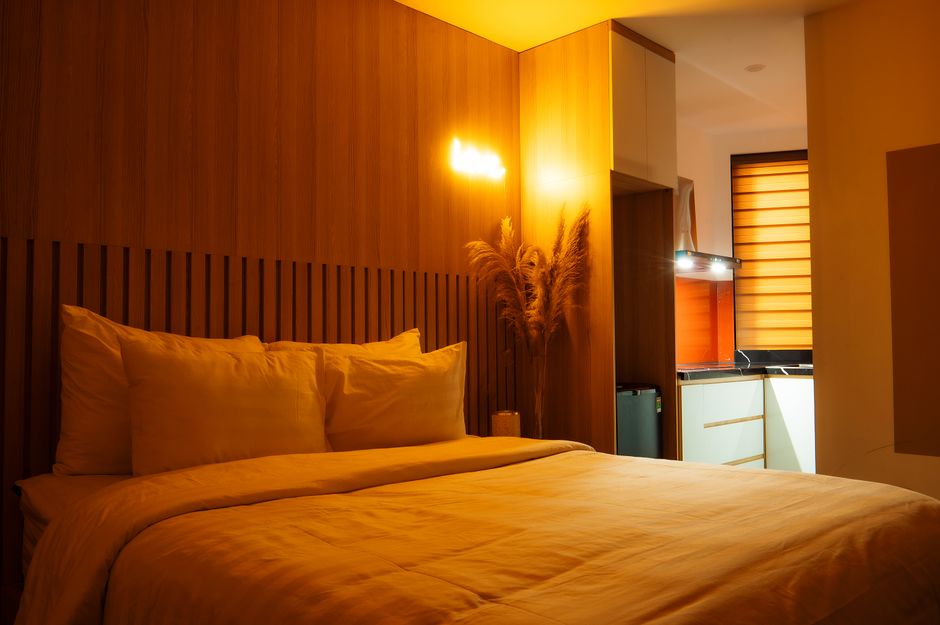
Quality and Longevity Markers
Not all LED fixtures are built equally. Thermal management—how well the fixture dissipates heat from the diodes—determines real-world lifespan.
Look for fixtures with robust aluminum heatsinks, proper ventilation, and drivers rated for your climate and duty cycle. A bargain fixture may fail in three years despite LED's theoretical 25,000-hour rating.
Warranty terms reveal manufacturer confidence. Five-year coverage is now baseline for reputable makers; ten-year warranties signal investment in quality.
Lighting Design Principles Still Matter
Efficiency and smart features solve the technical problem; design solves the aesthetic one. An LED fixture in the wrong location or wrong color temperature becomes a distraction regardless of wattage.
Layered lighting—ambient, task, and accent—remains the foundation. LEDs excel at all three, but the principle hasn't changed. Choose fixtures that serve the room's function and mood, not just fill space with light.
Color rendering index (CRI) matters too. Aim for 90+ for spaces where color accuracy or visual comfort is priority—kitchens, bathrooms, bedrooms. General ambient lighting can work at 80+ CRI.
The Practical Path Forward
LED adoption isn't a single decision—it's a series of fixture-by-fixture choices as renovations and replacements occur. Most homes reach full LED conversion gradually.
The technology has matured enough that reliability and design are no longer trade-offs. A quality LED fixture in 2026 performs well, lasts long, and looks intentional.
The real advantage is control. LEDs put the homeowner in charge of light's behavior—its brightness, color, timing, and mood. That's the shift worth noticing.