Stainless Steel Cookware: Durability, Maintenance, and Kitchen Performance

Stainless steel cookware has become a staple in home kitchens over the past few decades—valued for its resilience and neutral aesthetic.
Unlike non-stick or cast iron, stainless steel demands a different approach to cooking and care.
Understanding its strengths and quirks can mean the difference between a pan that lasts decades and one that performs poorly from day one.
Why Stainless Steel Dominates Modern Kitchens
Stainless steel's appeal lies in its combination of durability and versatility.
Unlike aluminum, it resists warping and corrosion. Unlike cast iron, it requires no seasoning.
The material can handle high heat, acidic foods, and dishwasher cycles without degrading—traits that matter to cooks who value longevity over fussiness.
According to Consumer Reports, stainless steel cookware consistently scores well for durability across independent testing.
That track record has made it the default choice for both casual home cooks and professionals.
Core Stainless Steel Properties
Heat Distribution and Cooking Technique
Stainless steel alone is a poor heat conductor—a reality that catches many cooks off guard.
Bare stainless heats unevenly and slowly. Quality cookware solves this by bonding an aluminum or copper core to the stainless exterior.
This clad construction distributes heat evenly across the pan bottom, preventing hot spots and uneven browning.
Revere Ware and similar heritage brands pioneered this approach decades ago, and it remains industry standard.
Cooks adapting from non-stick surfaces often find stainless steel requires higher heat, more fat, and patience—but the payoff is restaurant-quality browning and searing.
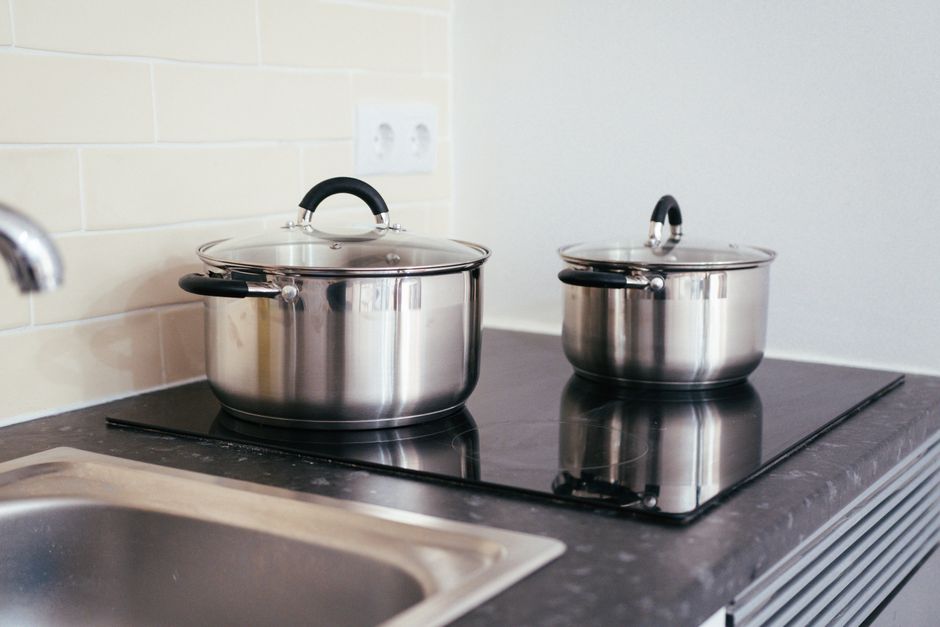
Stainless Steel: Strengths and Trade-Offs
Strengths
- Resistant to rust, corrosion, and staining with normal care
- Handles acidic ingredients (tomato sauce, wine) without degradation
- Dishwasher-safe; no hand-washing or seasoning rituals required
- Works with all cooktops, including induction (if magnetic grade)
- Excellent heat retention and browning capability when properly preheated
Trade-offs
- Food sticks more readily than non-stick surfaces; requires technique
- Slower initial heat-up than aluminum alone
- Surface can discolor or water-spot if minerals in water are high
- Higher upfront cost compared to budget cookware alternatives
- Requires proper cleaning habits to maintain appearance over time
Care and Longevity
Stainless steel's low-maintenance reputation is largely earned, but 'low' does not mean 'none.'
Acidic foods and prolonged moisture can eventually pit the surface if exposed repeatedly.
Hand-washing with mild detergent and drying immediately extends shine, though most modern stainless cookware tolerates dishwashers.
For stubborn spots, a paste of baking soda and water works; harsh scouring pads should be avoided to preserve the finish.
Stored dry in a cool cabinet, a quality stainless steel set easily outlives kitchen trends.

Not all stainless steel cookware is induction-compatible. Look for magnetic-grade stainless or a clad base that includes ferrous metal. Manufacturers typically indicate induction compatibility on packaging or their site.
The Lasting Appeal
Stainless steel cookware remains a sensible choice for home cooks seeking durability without fuss.
It rewards technique and proper maintenance with decades of reliable service.
In 2026, as kitchen trends shift between minimalism and nostalgia, stainless steel's neutral profile and genuine longevity keep it relevant—not as a fad, but as a quiet investment in functional cooking.